
Growing a rental business is exciting. Every new room means additional rental income, stronger cash flow, and better long-term returns. But growth also introduces a new challenge. What once felt easy with 10 or 20 rooms becomes increasingly difficult when you are responsible for 100 rental rooms spread across one or multiple properties.
Before deciding whether to hire a manager, review the time needed for tenant support, maintenance, billing and record keeping. Software can support record keeping while staff handle property operations.
If tenant records are stored in one notebook, rent payments are tracked in Excel, payment screenshots remain in WhatsApp, agreements are kept inside folders, and occupancy information exists only in your memory, even managing 30 rooms can become stressful.
Use consistent steps for move-ins, billing, recording payments and move-outs. These records help you review the workload and decide where additional help is needed.
In this guide, you'll learn twelve practical strategies that professional landlords use to simplify rental management, improve rent collection, reduce administrative work, and scale their rental business without immediately hiring a manager.
Why Managing 100 Rental Rooms Becomes Difficult
Most landlords believe the workload increases because the number of rooms increases. That's only part of the story.
The real difficulty comes from managing hundreds of small tasks every month.
- Tracking monthly rent payments.
- Updating tenant information.
- Managing room occupancy.
- Following up on pending rent.
- Handling move-ins and move-outs.
- Recording security deposits.
- Checking vacant rooms.
- Preparing income reports.
- Maintaining property records.
Individually these tasks are simple. Together they consume hours every week.
The landlords who struggle usually don't lack experience. They lack a structured management workflow.
Strategy 1: Build Systems Instead of Depending on Memory
Memory works when you own a handful of rooms.
It fails when your rental business grows.
You should never rely on memory to remember who paid rent, which room is vacant, whose agreement expires next month, or how much security deposit was collected two years ago.
Every important activity should follow the same repeatable process.
For example, every new tenant should always go through the same onboarding checklist.
- Verify identity documents.
- Create tenant profile.
- Assign room.
- Record monthly rent.
- Save security deposit.
- Store agreement details.
- Record move-in date.
When every tenant follows the same workflow, mistakes become rare and your rental business becomes easier to manage as it grows.
Strategy 2: Organize Every Property Digitally
If you manage multiple buildings, every property should have its own organized structure.
You should be able to answer these questions within seconds.
- How many rooms does this property have?
- How many rooms are occupied?
- How many rooms are vacant?
- What is the monthly rental income?
- How much rent is still pending?
- Which tenants recently moved in?
Without centralized property records, landlords waste valuable time searching for information instead of making business decisions.
Digital organization becomes even more important when your portfolio expands beyond one building.
Strategy 3: Maintain a Complete Record for Every Room
Every room should have its own permanent profile.
Instead of creating new paperwork every time a tenant changes, keep the room history intact.
A room record should include:
- Room number.
- Occupancy status.
- Current tenant.
- Monthly rent.
- Previous occupancy history.
- Payment records.
- Move-in and move-out dates.
This approach makes room allocation faster and eliminates confusion when tenants leave or change rooms.
Strategy 4: Create Complete Tenant Profiles
Tenant information should never be scattered across multiple places.
One digital profile should contain everything you need.
- Full name.
- Mobile number.
- Identity proof details.
- Emergency contact.
- Allocated room.
- Monthly rent amount.
- Security deposit.
- Payment history.
- Agreement information.
Complete tenant records improve communication, reduce disputes, and help landlords access important information instantly.
Strategy 5: Standardize Rent Collection Every Month
One of the biggest reasons landlords experience cash flow problems isn't because tenants refuse to pay. It's because rent collection is inconsistent.
Create one monthly workflow and follow it every month.
- Review due rent.
- Record received payments.
- Identify pending rent.
- Follow up with unpaid tenants.
- Update payment history.
- Review monthly collection reports.
Consistency is far more valuable than complexity. A simple, repeatable process dramatically improves rent collection over time.
Strategy 6: Track Vacancies in Real Time
Every vacant room represents lost income. If a room remains empty for even ten days, that revenue can never be recovered. Unfortunately, many landlords discover vacancies too late because occupancy records are scattered across notebooks, spreadsheets, or WhatsApp chats.
Instead, maintain a real-time occupancy dashboard that immediately tells you:
- Which rooms are occupied
- Which rooms are vacant
- Upcoming move-outs
- Available rooms ready for new tenants
- Current occupancy percentage
Having this information instantly available allows you to advertise vacant rooms faster, reduce vacancy periods, and increase overall rental income.
Strategy 7: Organise Repetitive Administrative Tasks
Use repeatable steps for creating bills, recording payments and reviewing pending rent. Prepare reminder messages from current records and send them after checking the details.
Tasks that can be streamlined include:
- Rent reminders
- Payment tracking
- Pending rent monitoring
- Tenant record management
- Room availability tracking
- Monthly rent reports
You still need to record payments, update allocations and send reminders. An organised dashboard helps you review those entries together.
Instead of spending hours updating spreadsheets or searching through payment screenshots, landlords can review everything from one organized dashboard.
Strategy 8: Review Your Business Weekly Instead of Solving Daily Problems
Many landlords spend their entire day reacting to issues.
A tenant hasn't paid rent.
Another tenant wants to change rooms.
A maintenance request arrives.
Someone asks for a payment receipt.
Without a structured review process, every small issue feels urgent.
Schedule one weekly business review covering:
- Pending rent
- Occupancy status
- Upcoming move-outs
- Vacant rooms
- Maintenance requests
- Monthly income progress
- Tenant complaints
Weekly reviews prevent operational problems from becoming financial problems.
Strategy 9: Keep Financial Records Organized
Managing 100 rental rooms means handling hundreds of financial transactions every month.
Without proper records, landlords often struggle to answer simple questions such as:
- How much rent was collected this month?
- Which tenants still have outstanding payments?
- How much security deposit is currently held?
- Which property generates the highest income?
Maintaining organized financial records helps landlords make better business decisions while also preparing for taxation, auditing, and future expansion.
Strategy 10: Standardize Communication With Tenants
One hidden challenge of managing a large rental portfolio is communication.
When every tenant receives different instructions, misunderstandings increase.
Create standard communication practices for:
- Move-in instructions
- Rent payment reminders
- Maintenance reporting
- House rules
- Move-out procedures
Consistent communication reduces confusion and creates a more professional rental experience.
Strategy 11: Use Rental Management Software Instead of Multiple Tools
Many landlords use one notebook for tenant records, Excel for payments, WhatsApp for communication, Google Drive for agreements, and manual calculations for reports.
This fragmented workflow creates unnecessary work.
A dedicated rental management app centralizes property records, tenant information, rent tracking, occupancy status, payment history, and reporting inside one platform.
For landlords managing dozens of rooms, this significantly reduces administrative effort while improving accuracy.
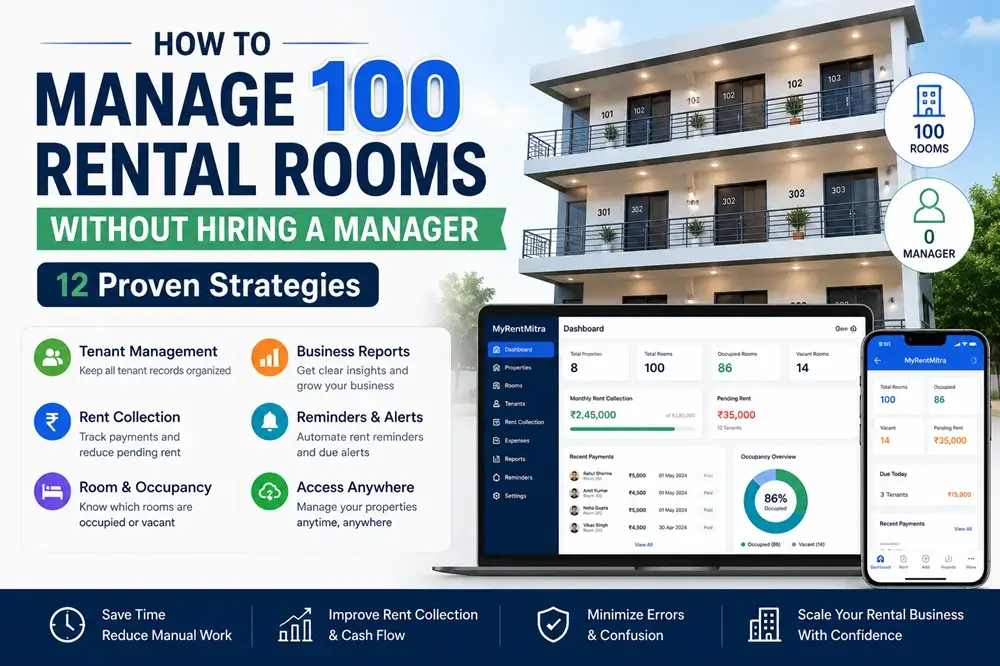
MyRentMitra is designed specifically for landlords, PG owners, room owners, and property managers who want to simplify rent collection, tenant management, and daily operations from one place. With the official Android app now available on Google Play, landlords can manage their rental business anytime and anywhere.
Strategy 12: Focus on Growing the Business Instead of Managing Chaos
Your goal shouldn't be spending more time managing existing rooms.
Your goal should be creating systems that allow you to confidently add the next property.
Before adding more rooms, review occupancy, expenses and the time needed to support existing tenants.
Instead of asking, "Can I manage another 20 rooms?" you'll begin asking, "Which property should I acquire next?"
That's the difference between operating a rental property and building a scalable rental business.
Common Mistakes Large Landlords Should Avoid
- Depending on memory instead of maintaining records.
- Tracking payments across multiple spreadsheets.
- Ignoring vacant room reports.
- Following up on pending rent inconsistently.
- Keeping incomplete tenant information.
- Managing multiple properties without a centralized system.
- Delaying digital transformation until problems become overwhelming.
Final Thoughts
Managing 100 rooms requires up-to-date records and enough capacity to handle tenant support and property maintenance.
Landlords who organize tenant records, standardize rent collection, monitor occupancy, review performance regularly, and adopt modern rental management software can successfully operate large rental portfolios with greater efficiency and less stress.
If you're planning to expand your rental business, now is the right time to replace manual processes with a structured digital workflow.
MyRentMitra helps manage properties, tenants, bills, recorded payments, pending rent and property expenses. Compare your required capacity with current plan limits before choosing a plan.
Frequently Asked Questions
Can one person manage 100 rental rooms?
It depends on the properties, tenant turnover, maintenance needs and time available. Software helps organise records but does not replace on-site work or tenant support.
What is the biggest challenge when managing multiple rental rooms?
The biggest challenge is keeping tenant records, rent payments, vacancies, and property information organized. A centralized management system solves most of these operational issues.
Should I hire a property manager or use rental management software?
Assess the time spent on record keeping separately from on-site maintenance and tenant support. Software and a property manager can serve different needs; choose based on your workload and budget.
How can I reduce pending rent?
Create a consistent rent collection process, monitor due dates regularly, send timely reminders, and maintain accurate payment records.
What features should a rental management app include?
Essential features include tenant management, room management, rent tracking, payment history, occupancy monitoring, reminders, reports, and centralized property records.
Is MyRentMitra suitable for PG owners and landlords?
Yes. MyRentMitra is designed for landlords, PG owners, hostel operators, and room owners who want to simplify daily rental operations, improve rent collection, and manage multiple properties efficiently.