
Renting out a room may seem simple, but a successful rental business starts long before a renter moves in. One of the biggest mistakes many landlords make is relying only on verbal promises. While mutual trust is important, a proper room rent agreement protects both the landlord and the renter from future disputes.
Whether you own a single rental room, multiple properties, a PG accommodation, or a small rental business, having a clear agreement is one of the smartest decisions you can make.
In this complete guide, you'll learn everything about room rent agreements, what information should be included, common mistakes to avoid, legal considerations, and how modern landlords can manage rental agreements digitally using MyRentMitra.
Why Is a Room Rent Agreement Important?
A room rent agreement is a written document that clearly defines the relationship between the landlord and the renter. It specifies the responsibilities, payment terms, security deposit, notice period, and other important conditions that both parties agree to follow.
Without a written agreement, even a small misunderstanding can turn into a serious problem. Questions like these often arise:
- When should rent be paid?
- How much is the security deposit?
- Who pays the electricity bill?
- Can the renter leave without notice?
- Can the landlord increase the rent anytime?
- Who is responsible for maintenance?
A properly written agreement answers all these questions before they become disputes.
Benefits of Having a Written Rent Agreement
- Creates transparency between landlord and renter.
- Avoids payment misunderstandings.
- Clearly defines rules and responsibilities.
- Protects both parties legally.
- Makes rent collection easier.
- Improves professionalism.
- Builds long-term trust.
- Helps maintain proper rental records.
Who Should Use a Rent Agreement?
Many people believe agreements are only necessary for large apartment owners. In reality, every landlord should have one.
A rent agreement is recommended for:
- Individual room owners
- House landlords
- PG owners
- Hostel operators
- Rental property investors
- Families renting extra rooms
- Multi-property landlords
Even if you're renting just one room, documentation creates clarity and helps avoid unnecessary complications later.
Essential Details Every Room Rent Agreement Should Include
1. Landlord Information
- Full Name
- Address
- Mobile Number
- Email Address
2. Renter Information
- Full Name
- Permanent Address
- Mobile Number
- ID Proof Details
- Emergency Contact
3. Property Details
The agreement should clearly mention which property and room is being rented.
- Property Name
- Floor Number
- Room Number
- Complete Address
Rent Amount and Due Date
This is one of the most important sections.
Clearly mention:
- Monthly Rent
- Rent Due Date
- Late Payment Charges (if applicable)
- Accepted Payment Methods
Example:
Monthly Rent: ₹6,500
Due Date: 5th of Every Month
Electricity and Utility Charges
Many rental disputes happen because utility charges are never discussed properly.
Your agreement should clearly mention:
- Electricity meter reading
- Per unit rate
- Water charges
- Maintenance charges
- Internet charges (if included)
Transparency helps both landlord and renter understand monthly billing without confusion.
Security Deposit
The agreement should specify:
- Deposit Amount
- Refund Conditions
- Damage Deductions
- Timeline for Refund
Never rely on verbal discussions regarding deposits.
Notice Period
Every rental agreement should define how much notice either party must provide before ending the rental.
Common notice periods include:
- 15 Days
- 30 Days
- 60 Days
This prevents unexpected vacancies and gives both parties enough time to make alternative arrangements.
House Rules
Every property has different rules.
Include guidelines such as:
- No illegal activities
- No property damage
- Noise restrictions
- Guest policy
- Parking rules
- Smoking policy
- Pet policy (if applicable)
Written rules help avoid unnecessary arguments later.
Common Mistakes Landlords Should Avoid
- Taking renters without ID verification.
- Not documenting security deposits.
- Accepting cash without receipts.
- Ignoring monthly payment records.
- Using handwritten notes instead of digital records.
- Not keeping copies of agreements.
- Depending only on WhatsApp chats.
Professional landlords treat documentation as an essential part of property management.
Digital Agreement Management Makes Life Easier
As your rental business grows, managing agreements manually becomes increasingly difficult. Papers get misplaced, spreadsheets become confusing, and searching for old renter details takes unnecessary time.
This is where digital rental management software becomes valuable.
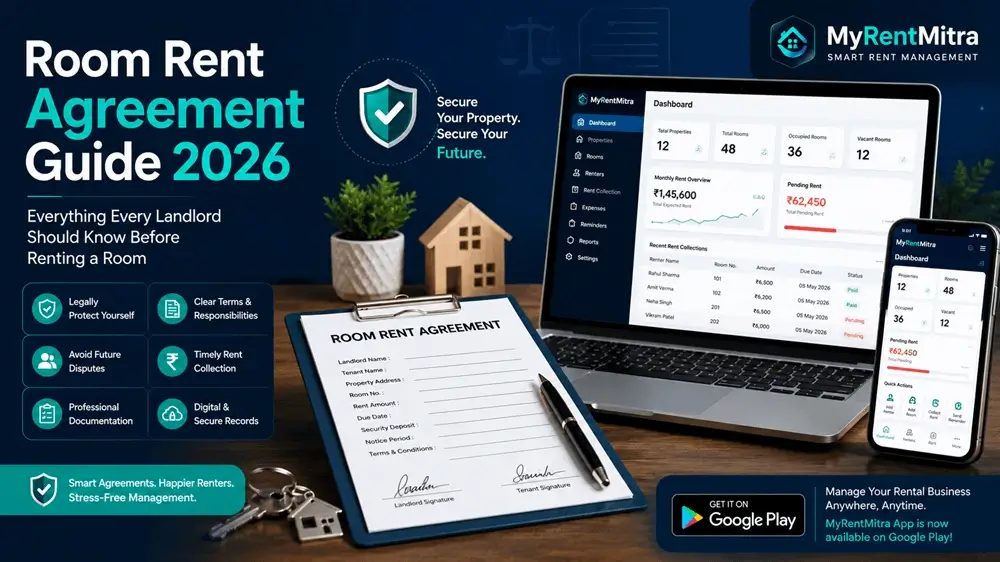
MyRentMitra allows landlords to organize rental operations from a single dashboard. Instead of maintaining separate diaries, Excel sheets, and folders, landlords can manage properties, rooms, renters, monthly billing, rent tracking, and payment history in one place.
Link each renter to the correct room and property so you can find their rental records when needed.
Manage Rentals Anytime with the MyRentMitra Mobile App
Rental management doesn't always happen from your office or home. Sometimes you're visiting a property, meeting renters, or travelling when you need quick access to important information.
That's why MyRentMitra is now available on Google Play.
Using the mobile app, landlords can manage rental operations from virtually anywhere.
- View all properties
- Track occupied and vacant rooms
- Monitor pending rent
- Review billing history
- Access renter information instantly
- Manage multiple properties from one account
Whether you own 2 rooms or hundreds of rental units, having your rental business in your pocket saves time and helps you stay organized.
Why Modern Landlords Are Moving Away from Excel
Excel spreadsheets work well initially, but as more renters, rooms, and properties are added, they become increasingly difficult to maintain. Searching for renter history, calculating electricity charges, tracking due payments, and sending reminders manually consumes valuable time every month.
Rental management software helps organise room and tenant records, create rent bills and review recorded payments. Keep entries up to date and review pending amounts before sending a reminder.
For landlords planning long-term growth, digital management is no longer just a convenience—it's becoming a necessity.
Frequently Asked Questions (FAQs)
1. Is a room rent agreement legally required in India?
While the exact legal requirements may vary depending on the state and rental arrangement, having a written room rent agreement is strongly recommended. It clearly defines the responsibilities of both the landlord and the renter, reduces misunderstandings, and serves as an important record if disputes arise in the future.
2. What should be included in a room rent agreement?
A good room rent agreement should include the landlord's and renter's details, property address, room number, monthly rent, security deposit, payment due date, electricity and maintenance charges, notice period, house rules, and signatures of both parties.
3. Can I create a room rent agreement without a lawyer?
Yes. Most landlords can prepare a simple room rent agreement themselves by including all the essential rental terms. However, for high-value properties or complex rental arrangements, consulting a legal professional is always advisable.
4. How can landlords keep track of rent agreements and renter records?
Instead of maintaining paper files or Excel sheets, landlords can use rental management software like MyRentMitra to organize properties, rooms, renters, billing history, pending rent, payment records, and important rental information from a single dashboard.
5. Is MyRentMitra available on mobile?
Yes. MyRentMitra is available on Google Play, allowing landlords to manage rental properties, monitor pending rent, track payments, and access renter information directly from their Android smartphones, anytime and anywhere.
6. Why is a written rent agreement better than a verbal agreement?
A written agreement provides clarity for both parties. It records important terms such as rent amount, due dates, security deposit, notice period, and house rules, helping avoid future misunderstandings and making rental management more professional.